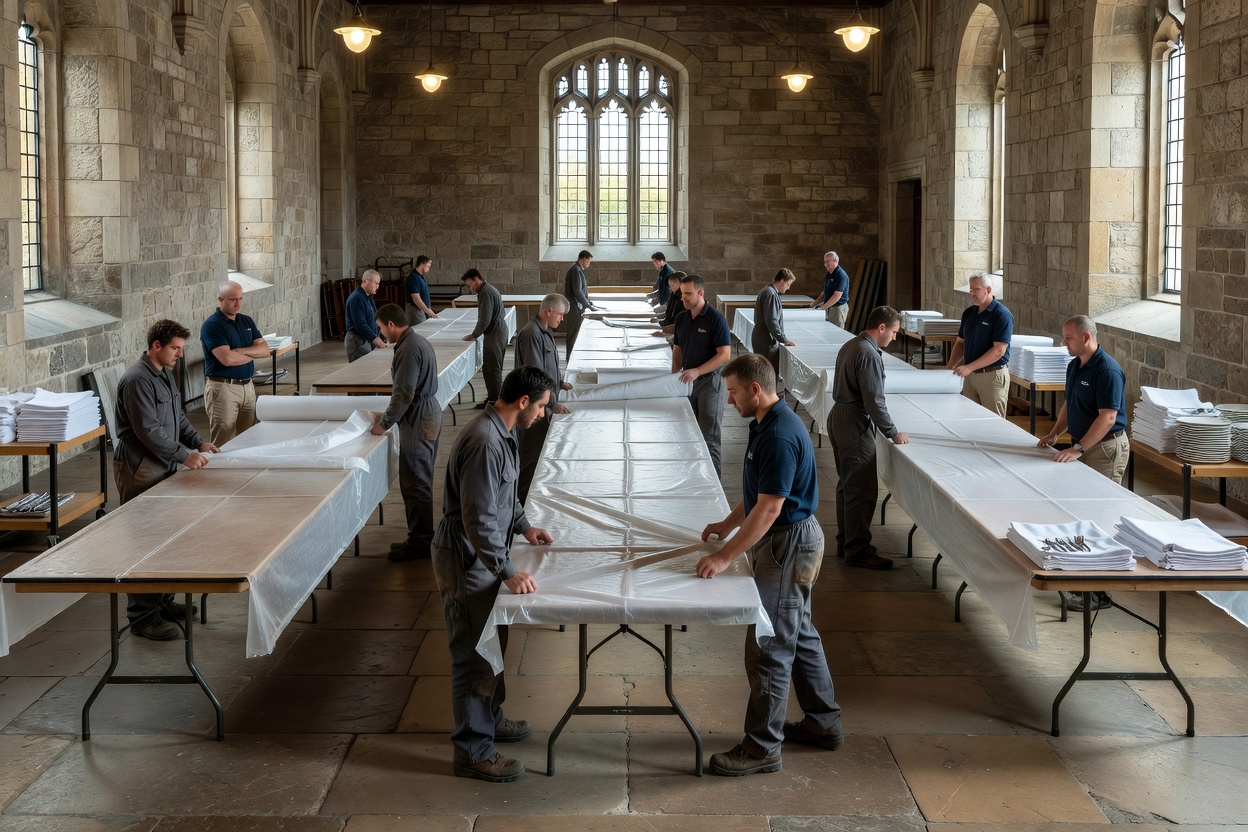
Staged Load-Out and Decant Management
Fatigue during late-night pack-downs is the leading cause of accidental damage in historic venues. Do not allow suppliers to dismantle setups simultaneously in cramped corridors. Establish a strict load-out sequence: first catering waste and bar stock, then AV gear and trussing, and finally hired furniture. Floor protection must remain fully taped and secured until the very last flight case has cleared the doorway.
Waste Handling and Clean-Down Procedures
All catering waste, glass recycling, and organic debris must be sealed and removed immediately. Never drag full rubbish sacks across parquet floors or stone terraces; always carry waste bins on rubber-wheeled flatbeds. Use commercial HEPA-filtered vacuums on historic floors rather than coarse bristle brooms that push abrasive grit into wood joints. Avoid aggressive detergents; use only manufacturer-approved, pH-neutral solutions for floor cleaning.
Comparative Condition Surveying
Conduct a room-by-room inspection comparing current conditions against pre-event baseline photos. Inspect door frames, low skirting boards, threshold stones, and wall panels near former bar stations. Document any new scuffs, wax drips, or liquid marks in the official handover logbook. Immediate reporting allows property owners to arrange proper conservation treatment before stains set into porous stone.
Definitive Boundary: Event Reset is Not Conservation
Routine event cleaning and furniture resets do not replace heritage conservation. Staff must never apply commercial polish, bleach, or solvent stain removers to antique timber, stone, or woven tapestries.
Furniture Return and Room Re-Alignment
Once temporary items are removed and floors are cleaned, return the venue's permanent antique furniture to its archival layout. Refer to original floor plan diagrams to ensure tables, cabinets, and seating are placed precisely back on their protective feet or coasters. Lift all historic furniture carefully during movement; never drag heavy tables or chests across timber boards.
Outdoor and Ground Restoration
Grounds require careful post-event attention. Inspect gravel drives for rutting, fluid leaks from delivery vehicles, and discarded debris. Hand-rake gravel back to an even grade and sweep courtyard flagstones. If lawns were covered by temporary flooring, remove the panels promptly to prevent turf yellowing, and aerate any compacted soil edges.
Post-Event Decant Sequence Matrix
| Sequence Stage | Operational Focus | Handover Condition Check |
|---|---|---|
| Phase 1: Glass & Food Waste | Bar stock extraction; wet food waste containment | Zero liquids left in catering pantries; bins double-bagged |
| Phase 2: Technical Production | Lighting truss dismantling & cable retrieval | All cable tape safely removed; no residue on stone surfaces |
| Phase 3: Event Furniture | Tables folded and stacked on padded dollies | Skirting boards checked; floor runners removed last |
| Phase 4: Property Handover | Final vacuum pass & baseline photo comparison | Logbook signed by event manager and estate curator |
Need structured post-event reset protocols for an upcoming function?
Request Handover Protocol