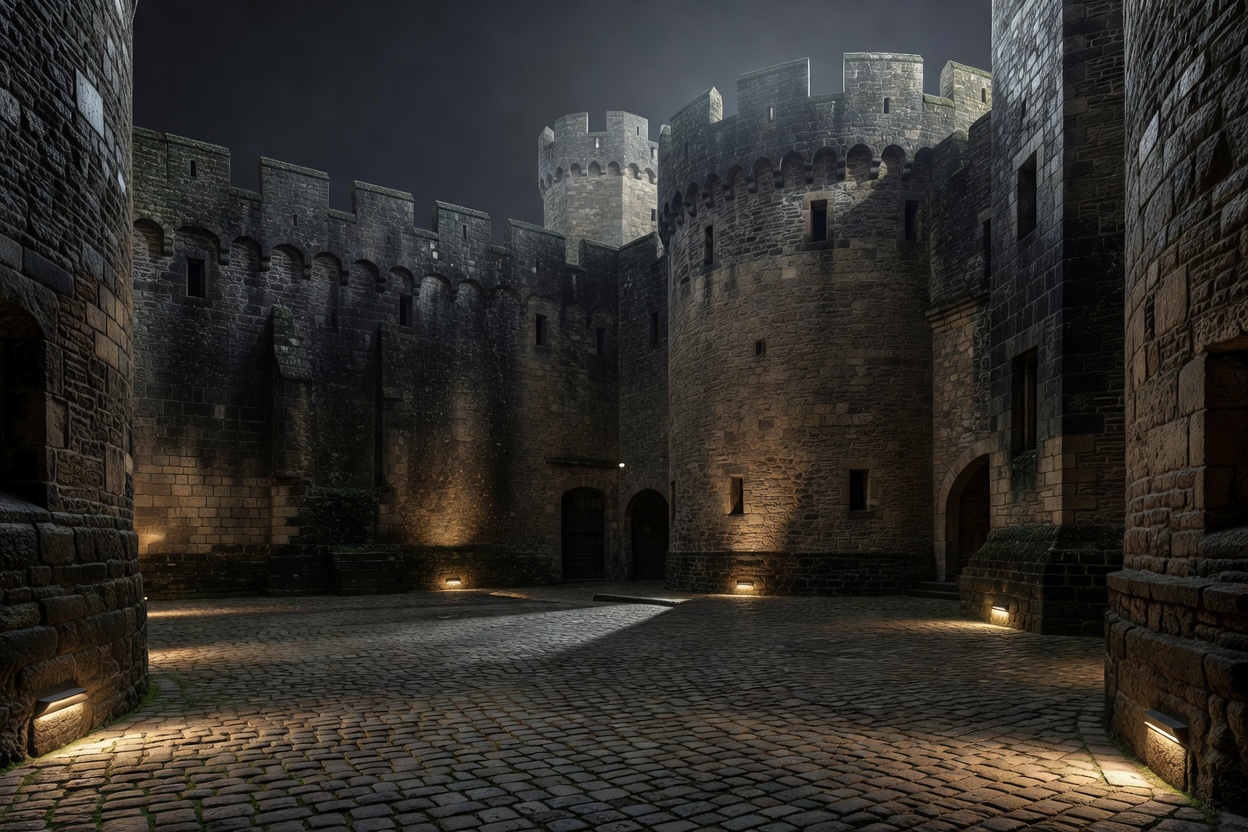
Perimeter Access and Gatehouse Readiness
Gatehouses, postern gates, and estate approach drives form the first physical impression and the primary operational bottleneck. Measure bridge load limitations and arch clearance heights before booking supply vehicles. Establish a designated holding zone outside the main estate gates for early catering trucks. Vehicles must never queue inside narrow gravel drives or park directly above old vaulted cellars or stone conduits.
Courtyard and External Pathway Circulation
Historic flagstones, cobbles, and gravel drives require distinct visitor flow management. Cobbled paths present tripping risks in dim evening light. Deploy subtle, low-level illumination along walking paths without staking fixtures into ancient masonry mortar. Use free-standing bronze or cast-iron stanchions to keep guests along stabilized paths and away from untamed lawns or unprotected retaining walls.
Temporary Structures and Marquee Ground Preparation
Erecting temporary pavilions or marquees on estate lawns requires prior underground survey review. Long metal ground stakes can sever historic drainage channels, irrigation lines, or buried stone footings. Where underground conditions are unverified, require water-ballasted or concrete-weighted tent frames instead of ground pegging. Lay interlocking protective flooring across turf zones to distribute weight and prevent mud churning.
Operational Rule: Tree Root Protection
Historic estate trees have extensive root systems sensitive to ground compaction. No vehicles, heavy generators, or staging containers may sit within the dripline of mature trees.
Utility Distribution and External Cable Management
Historic castle walls rarely offer accessible external power sockets. Position temporary silenced generators downwind in utility yards, buffered by acoustic hoarding. Route three-phase distribution cables across service pathways inside heavy-duty modular rubber cable ramps. Never string power cables through ancient ivy or hoist wires across ornamental carved masonry.
Weather Exposure and Outdoor Property Care
Estate events are vulnerable to wind and rain. Prepare sheltered transition vestibules where outdoor terraces connect with stone castle halls. Have coir or heavy-duty rubber matting ready at all transition points to capture mud, wet leaves, and moisture before guests enter historic rooms. Ensure an immediate indoor wet-weather fallback plan is fully staged so a sudden downpour does not cause an uncontrolled rush into delicate rooms.
Castle Grounds: Logistics Protocol Overview
| Zone | Primary Hazard | Operational Countermeasure |
|---|---|---|
| Historic Courtyard | Uneven cobbles & poor night visibility | Weighted low-level warm LED guide lamps along perimeter borders |
| Estate Turf Lawn | Soil compaction & turf tearing | Heavy-duty interlocking subfloor panels; strictly ballasted frames |
| Moat Bridge / Gatehouse | Axle weight overload & structural scraping | Maximum vehicle gross weight limits; offsite shuttle transfer |
| Service Outworks | Catering diesel generator noise & fumes | Positioned behind agricultural outbuildings with acoustic baffling |
Planning an event on historic estate grounds or within a castle enclosure?
Request Exterior Review