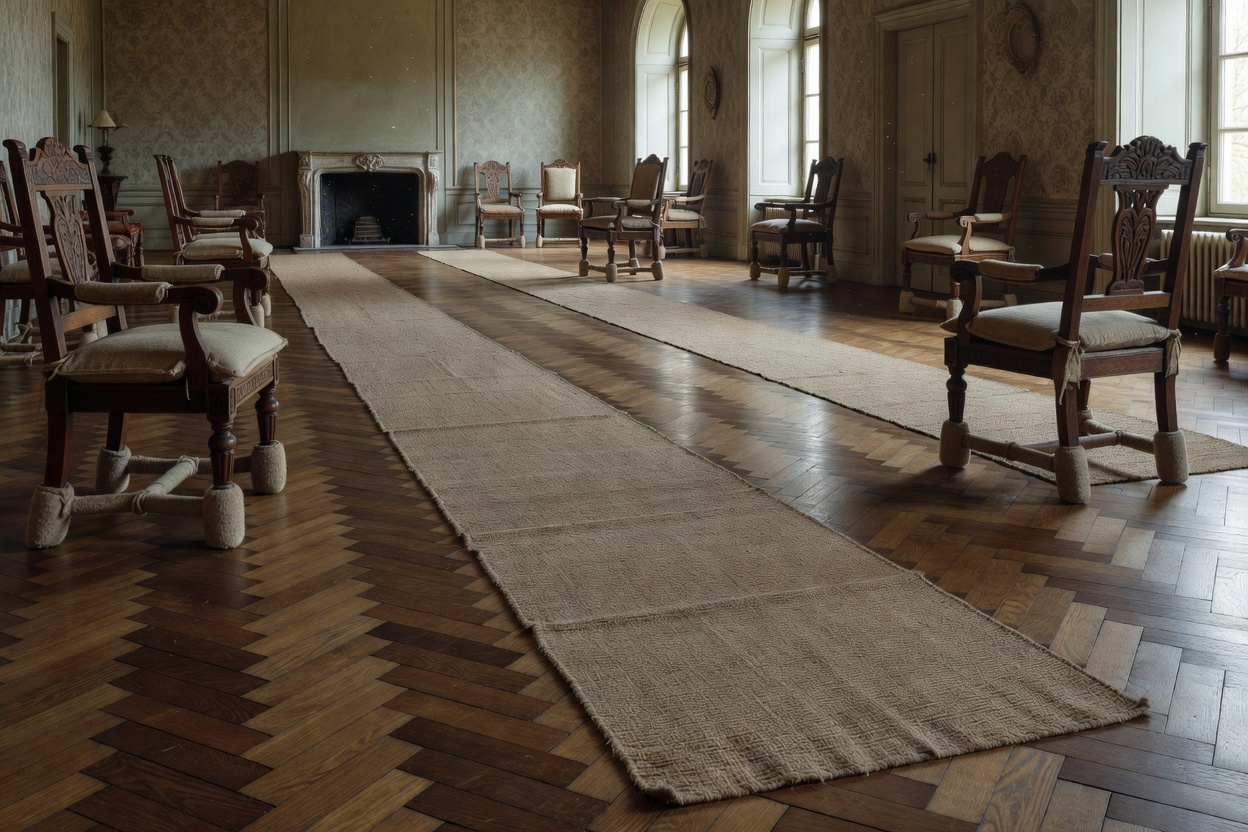
Spatial Separation and Furniture Placement
In rooms with historic paneling or fabric wall hangings, maintain an absolute buffer of at least 500 millimeters between any guest seating or service station and the wall. Chairs pushed back from tables must never contact skirting boards, dado rails, or painted fabric. All contemporary event furniture—tables, chairs, bars—must be fitted with soft, non-marking felt or silicone foot pads. Never allow bare metal chair legs or unpadded service dollies on polished wooden floors.
Floor Protection and Weight Distribution
Parquet de Versailles, herringbone oak, and soft pine boards are easily scored by grit and high-heeled footwear. Install breathable protective runners along main guest paths. Never seal historic timber under non-breathable plastic sheets for extended periods, as trapped condensation will ruin historic wax finishes. For heavy installations like grand pianos, mobile cocktail stations, or floral arches, lay dual-density underlay beneath dense load-spreading boards.
Thresholds and Doorway Protections
Carved stone thresholds and decorative timber architraves suffer heavy wear during equipment load-in. Wrap door frames in split-foam pipe insulation held with non-marking cloth straps—never use adhesive tape directly on wood, paint, or gilding. Place bevelled timber threshold ramps across high sills to let equipment trolleys roll smoothly without striking or chipping stone edges.
Safety Boundary: Conservation vs. Event Prep
Routine event preparation involves installing surface protection and positioning freestanding furniture. It is not conservation treatment. If an antique surface or plaster detail is unstable, report it immediately to venue conservation staff; do not attempt cleaning or repairs.
Lighting, Temperature, and Decorative Sensitivity
Historic paintings, tapestries, and antique books degrade rapidly when exposed to high temperatures and ultraviolet light. Use cool-running, UV-filtered LED fixtures positioned well away from fragile wall coverings. Prohibit tungsten and halogen floodlights that emit high radiant heat. Maintain steady indoor room temperatures and avoid blasting high-powered portable space heaters directly onto wood paneling or historic plaster ceilings.
Cable Management and Technical Rigging Rules
All temporary technical systems must be completely free-standing. Use self-supporting weighted aluminum truss towers positioned away from decorative architectural columns. Run cables along perimeter floorboards inside flat, bevelled rubber raceways. If cables must bridge a walkway, use weighted rubber covers rather than tape. Under no circumstances may tape be applied to stone, polished timber, historic tiles, or wallpaper.
Historic Room Safeguards Summary
| Room Feature | Operational Risk | Mandatory Safeguard |
|---|---|---|
| Historic Parquet | Indentation and heel scratching | Breathable felt underlay under runner carpets; felt feet on all chairs |
| Carved Stone Jambs | Impact from delivery flight cases | Padded foam column buffers strapped in place (zero adhesive tape) |
| Wall Tapestries | Thermal drying & light degradation | Zero radiant heat lamps; LED lighting set at least 2 meters back |
| Marble Fireplaces | Guest drink placement & stains | Custom protective acrylic mantle covers or cordoned perimeter zones |
Preparing a delicate historic drawing room or dining salon for an upcoming function?
Schedule Interior Audit